Alkyd vs Acrylic — Trim Paint Showdown
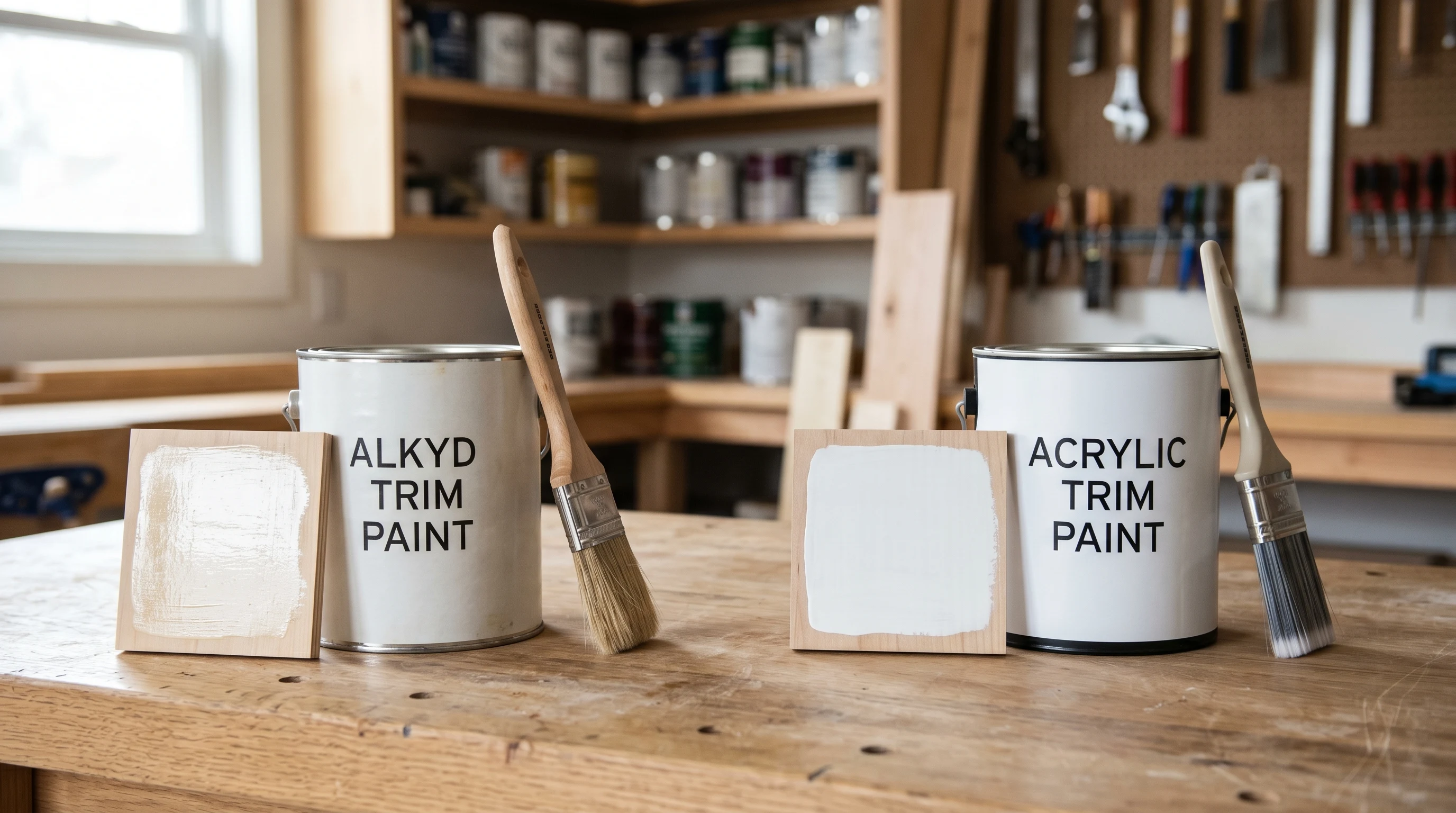
Alkyd self-levels and cures rock-hard but yellows on white. Acrylic stays white. Waterborne alkyd hybrids split the difference. Pick by visibility, color, and airflow.

The 30-Second Answer
If the trim is white and you want it to stay white, paint acrylic. If the trim is colored, eye-level, and you want the brush marks to disappear, paint alkyd — but use a waterborne alkyd (Benjamin Moore Advance or Sherwin ProClassic Waterborne), not the old solvent-borne stuff. Pure acrylic in pure white. Waterborne alkyd in everything else. That covers about 95% of jobs.
At a Glance
| Alkyd (waterborne) | Pure Acrylic | |
|---|---|---|
| Leveling | ✓✓ (glass) | ✓ (depends on brush) |
| Cured hardness | ✓✓ | ✓ |
| Yellowing on whites | ✗ (some at year 2) | ✓✓ (stays white) |
| Dry time / smell | ~ (slow, mild odor) | ✓✓ (fast, low odor) |
| Cleanup / VOC | ✓ (water, <50 g/L) | ✓✓ (water, <50 g/L) |
Traditional solvent-borne alkyd would lose the cleanup row outright (mineral spirits, 250+ g/L) and that’s why it’s hard to find at retail in 2026. Most of this article is comparing waterborne alkyd against acrylic — the two formulas you actually see on the shelf today.
How to Tell What’s Already on the Trim
Before you decide what to put on next, figure out what’s underneath. Dab a cotton ball with denatured alcohol on a hidden spot — back of the door jamb, behind a hinge. If color transfers to the cotton, it’s acrylic or latex. If the cotton comes back clean, it’s alkyd. Thirty seconds, no guessing. Pre-1990 trim is almost always alkyd. Post-2010 builder-grade trim is almost always acrylic.
Leveling
This is where alkyd earned its reputation. Alkyd flows under the brush as the carrier evaporates — the brush marks self-level into a glass finish before the film locks. You can see it happen. Lay a wet stroke down, watch it settle for thirty seconds, and the ridges flatten on their own.
Acrylic doesn’t do that. The water carrier flashes off fast (that’s the whole point of waterborne paint), and once it flashes, the film stops flowing. Whatever the brush left, you live with. Premium acrylics — Aura, Emerald, Cabinet Coat — flow better than commodity acrylic because the resin is engineered for open time, but they still don’t self-level the way alkyd does.
Waterborne alkyd splits the difference. BM Advance and SW ProClassic Waterborne use a real alkyd resin in a waterborne emulsion. Open time is closer to oil than to acrylic. Brush marks settle. Not glass-smooth like traditional alkyd, but a lot closer than acrylic gets.
Winner: Alkyd (waterborne or traditional).
Cured Hardness
Alkyd cures harder than acrylic. That’s the chemistry. The alkyd resin keeps cross-linking for 30–60 days after the paint feels dry, and the final film resists fingernail dents, latch-plate prints, and chair-back rubs better than acrylic.
The catch is the cure curve. Traditional alkyd hits full hardness around day 60–90. Waterborne alkyd gets to 90% of full hardness by day 30. Acrylic finishes curing at 14–30 days, but the final hardness is lower — call it about three-quarters of where alkyd lands.
For trim that gets touched constantly (handrails, door edges, cabinet styles), alkyd wins on durability. For trim that just sits there (baseboards, crown), acrylic is plenty.
Winner: Alkyd.
Yellowing on White
Here’s the one alkyd loses cleanly. Alkyd resin oxidizes as it cures, and oxidation produces a yellow-amber tint that deepens over time. On a Decorator’s White or Chantilly Lace trim, you’ll see it at year two. By year five it’s obvious. The inside of a closet — low light, low airflow — yellows faster than the outside of a closet. Same paint, same year.
Waterborne alkyd yellows less than traditional alkyd, but it still yellows. Advance on bright-white doors picks up an amber cast in 18–24 months in low-light rooms. Pure acrylic stays color-stable. The pigments and the resin don’t oxidize the same way.
I see this every spring on north-facing closet doors painted in oil five or six years ago. The owner thinks the white “got dirty.” It didn’t. The resin yellowed.
Winner: Acrylic.
Dry Time and Airflow
Alkyd is slow. Touch-dry in 4–8 hours, recoat at 16 hours, re-handle the door at day 5–7. Acrylic is fast — touch-dry in 1 hour, recoat in 4, back in service the next day.
The slow cure is partly why alkyd levels so well. It’s also why painting a bathroom door in alkyd is a hassle: you can’t close the door for a week. Plan accordingly or do it during a vacation.
Smell tells the same story. Traditional alkyd needs ventilation for 3–4 days. Waterborne alkyd smells mildly chemical for 24 hours. Acrylic is gone in a few hours. If you’re painting a kid’s bedroom and they need the room back tonight, that gap matters.
Winner: Acrylic.
Cleanup and VOC
Traditional alkyd needs mineral spirits, a sealed jar, three rinse cycles, and a trip to the hazardous-waste drop. Waterborne alkyd cleans with soap and water. Acrylic cleans with soap and water.
VOC: traditional alkyd is 250–550 g/L. Waterborne alkyd and modern acrylic both run under 50 g/L. California, New York, and OTC states cap residential paint at 50 g/L, which is why traditional alkyd has effectively disappeared from retail shelves in those markets.
For the brush-and-bucket reality of cleanup, waterborne alkyd and acrylic are a wash. Either beats solvent-borne anything.
Winner: Acrylic (by a hair over waterborne alkyd; both crush traditional alkyd).
The Cure-Curve Table
| Stage | Traditional Alkyd | Waterborne Alkyd | Acrylic |
|---|---|---|---|
| Touch dry | 4–8 hours | 4–6 hours | 1 hour |
| Recoat | 16–24 hours | 16 hours | 4 hours |
| Light use | 5–7 days | 5–7 days | 1–2 days |
| Full hardness | 60–90 days | 30 days | 14–30 days |
Re-hang a cabinet door before light-use day and the hinge screw will print into the paint. Wait the full window even if the can says you can move faster. The can is selling you a fairy tale on this one.
The Decision Tree
Three questions get you to the right answer.
1. Is the trim white, and does it need to stay white? Yes → acrylic. No question. Don’t even price the alkyd.
2. Is the trim at eye level, in raking light, or on a door you stare at? Yes → waterborne alkyd. The leveling matters when the brush marks would be visible. No (above eye level, soft light, baseboards behind furniture) → acrylic is fine.
3. Can the room sit unused for a week? Yes → waterborne alkyd is in play. No (bathroom door, kid’s bedroom, only-entry door) → acrylic. The fast cure wins.
Tight airflow rooms (powder rooms, closets, basements without windows) push you toward acrylic too. Alkyd needs ventilation to cure properly and smell-down. A sealed-up powder room painted in alkyd holds odor for a week.
Verdict by Use Case
- Pick waterborne alkyd if: colored trim or doors you’ll see in raking light, kitchen cabinets, raised-panel interior doors, handrails, anywhere you want maximum leveling and dent resistance and the room can sit unused for a week.
- Pick pure acrylic if: white trim that has to stay white, ceilings, north-facing rooms, low-airflow rooms, anywhere a kid or pet needs the space back tonight, builder-grade trim where the labor cost matters more than the last 10% of finish quality.
- It’s basically a tie when: the trim is a mid-tone color, above eye level, in a room with good airflow and a week of downtime. Either will look fine in two years. Pick whichever brush you’ve got.
Skip traditional solvent-borne alkyd unless you’re refinishing antique furniture and you’ve done it before. It’s not banned, but it’s not worth fighting your county hazardous-waste calendar.
Top Picks by Side
Going with waterborne alkyd? Benjamin Moore Advance and Sherwin ProClassic Waterborne are the two to know. See the best paint for kitchen cabinets for the full pick set.
Going with pure acrylic? BM Aura Semi-Gloss and SW Emerald Trim Enamel lead. Same round-up covers both, plus a budget pick.
For the deeper chemistry, the oil vs water-based paint comparison covers the VOC and cure-curve story at more length.
What’ll Bite You in Two Years
Skip the BIN primer when you put acrylic over old alkyd trim, and the new paint will peel at every door edge by month 10. Paint a north-facing closet door in alkyd and tell the homeowner “Decorator’s White” — by month 24 it reads cream, and they’ll think you mixed the wrong color. Re-hang a freshly-alkyd-painted cabinet door at day three because the can said recoat in 16 hours — the hinge screw prints the paint and the dent never lifts.
Two coats. Always two coats. Respect the cure window. And if the trim is white, paint acrylic.