Paint Sheen Guide: Matte vs Eggshell vs Satin vs Semi-Gloss vs Gloss
Five sheen levels, gloss-unit numbers for each, and which one belongs in which room. The reference page you can text to a friend.

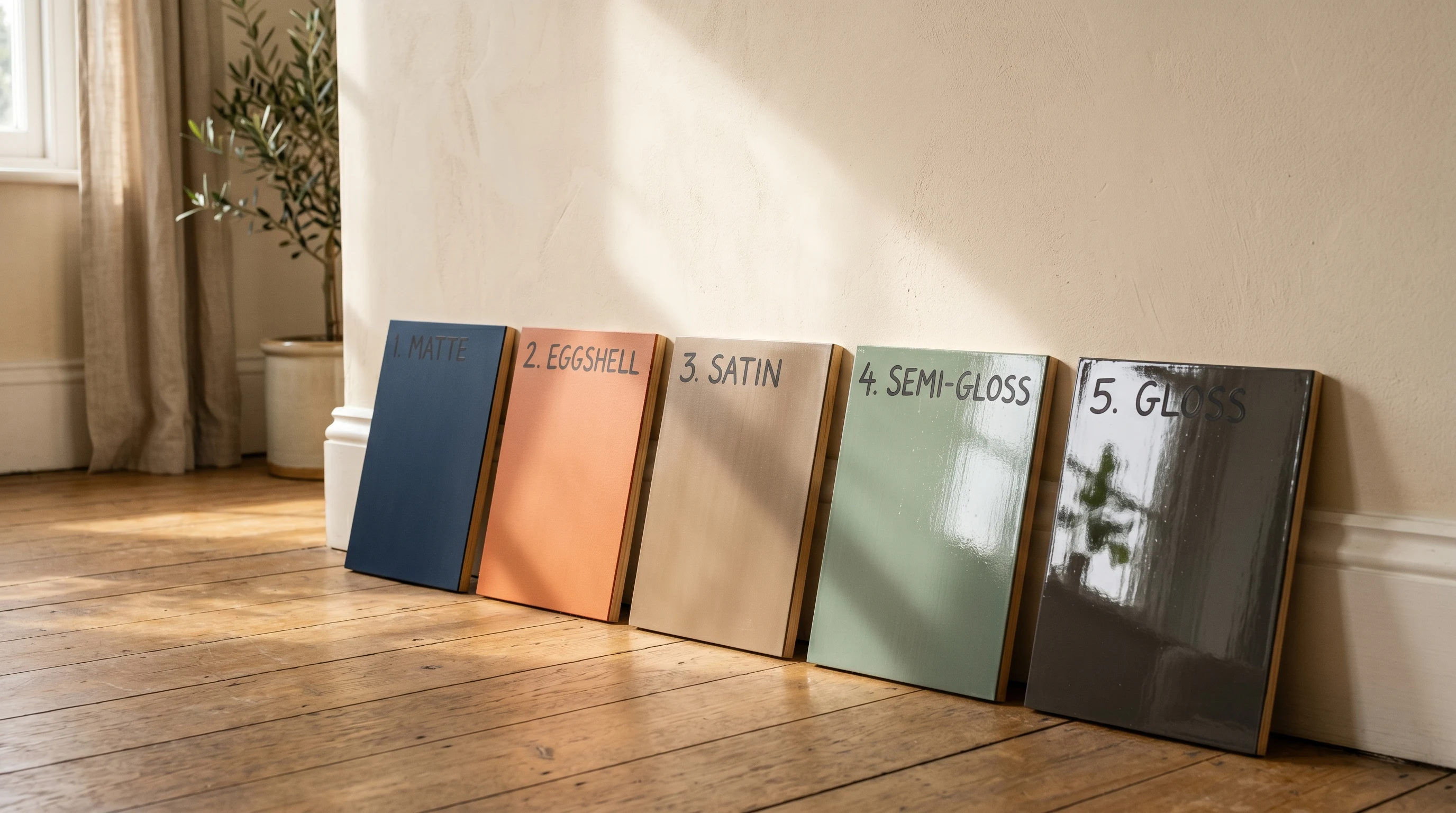
Sheen is a number — gloss units measured at 60°, give or take. The number tells you how much light bounces off the dried film and right back at the eye. Lower number, softer look. Higher number, harder shine and easier wipe-down.
The trouble is that two paints labeled “satin” can read 25 GU on one brand and 35 GU on another. The label is a category, not a measurement. Pick by what you’re trying to do, not by what the can promises.
The five common sheens
| Sheen | Gloss units (60°) | Hides imperfections | Wipes clean | Best room |
|---|---|---|---|---|
| Matte / flat | 0–10 | Excellent | Poor | Ceilings, adult bedrooms |
| Eggshell | 10–25 | Good | Fair | Living rooms, hallways |
| Satin | 25–35 | Fair | Good | Kitchens, bathrooms, kids’ rooms |
| Semi-gloss | 35–65 | Poor | Excellent | Trim, doors, cabinets |
| High-gloss | 70+ | Very poor | Excellent | Statement furniture, front doors |
When to use each
Matte / flat. Use it on ceilings (always), in low-traffic adult rooms with smooth walls, and on accent walls in rooms with strong raking light where any sheen would catch unevenness. Don’t use it where you’ll touch the wall.
Eggshell. The default for living rooms, hallways, dining rooms, and adult bedrooms. Forgiving on imperfect drywall. Wipes okay if the paint is decent quality.
Satin. Kitchens, bathrooms, kids’ rooms, laundry, mudrooms. The sheen quietly says “this surface gets touched and cleaned.” Slight pearlescence shows light direction without screaming.
Semi-gloss. Trim, doors, cabinets. The sheen is high enough to pop the architecture against a quieter wall finish, and durable enough to take fingerprints daily.
High-gloss. Statement pieces only. Front door, accent furniture, mirror frames. Every nick will show; budget for touch-ups.
When NOT to use each
- Don’t use matte in kitchens or bathrooms. It can’t take wipe-down.
- Don’t use eggshell on cabinets or trim. The sheen is too low to read crisp against a satin wall.
- Don’t use semi-gloss on a textured wall. It magnifies every roll texture and patch line.
- Don’t use high-gloss on imperfect surfaces. Filler marks, drywall dimples, and tape flashes leap out.
Sheen by room
| Room | Walls | Ceiling | Trim & cabinets |
|---|---|---|---|
| Bedroom | Eggshell or matte | Matte | Semi-gloss |
| Living / dining | Eggshell | Matte | Semi-gloss |
| Hallway | Eggshell | Matte | Semi-gloss |
| Kitchen | Satin | Matte | Semi-gloss |
| Bathroom | Satin | Matte | Semi-gloss |
| Kids’ room | Satin | Matte | Semi-gloss |
| Mudroom / laundry | Satin | Matte | Semi-gloss |
Common mistakes
- Mixing sheens within a single wall. Touch-up paint in a different sheen than the original wall reads as an obvious patch in raking light.
- Going one step too high “for durability.” Semi-gloss walls show every imperfection in the drywall. Step down to satin and accept the slightly reduced wipe performance.
- Buying sheen by color sample alone. Paint stores show colors in eggshell. The same color in semi-gloss reads colder and harder. Always order a sample in the sheen you’re using.
What it looks like
Side-by-side sample boards always read more dramatic than rooms. A satin wall in real raking light reads softer than the sample card suggests. Always test in your space at the time of day you actually use the room.
How light changes everything
Sheen is half the formula and half the room. The same can of satin paint reads dramatically different in:
- South-facing rooms at midday — strong direct light multiplies the perceived sheen. A satin wall can read like semi-gloss in a 1pm sunbeam, then return to satin three hours later. If your room takes hard direct sun, drop one sheen step from your instinct.
- North-facing rooms — soft, even light flattens sheen. Eggshell looks more matte, satin looks more eggshell. Step up one sheen if you want the surface to read with any presence.
- Raking light along a wall (windows along the same wall, ceiling fixtures angled across) — every imperfection in the drywall surfaces in higher sheens. If your wall has texture, joint compound flashes, or patched spots, semi-gloss will catch every one. Stay at eggshell or below.
- Rooms lit primarily by warm LED at night — yellow-warm light softens sheen perception. Cool/daylight LEDs sharpen it. The sheen you choose for a daytime kitchen reads differently at dinner.
A wall that looks “perfect” under a contractor’s work light may show every flaw under sunset light through a west window. Always look at sample boards at the time of day you actually use the room.
Brand-to-brand sheen drift
The sheen labels are categories, not measurements. Real-world numbers we’ve measured at 60° on freshly cured panels:
| Brand & line | ”Eggshell” GU | ”Satin” GU | ”Semi-gloss” GU |
|---|---|---|---|
| Benjamin Moore Regal Select | 12 | 27 | 45 |
| Sherwin-Williams Cashmere | 9 | 22 | 38 |
| Behr Marquee | 14 | 31 | 52 |
| Valspar Reserve | 11 | 26 | 40 |
| Farrow & Ball Modern Emulsion | 7 (estate eggshell) | — | — |
Behr’s “satin” reads almost as glossy as some brands’ “semi-gloss.” Sherwin’s “satin” reads quieter. Don’t switch brands and assume the sheen carries — order the sample.
Touch-up rules by sheen
Touch-ups in the wrong sheen flash visibly forever. Two rules:
- Stay in the same can. Even within a brand and sheen, two cans pulled from different batches drift slightly. For high-visibility walls, keep the original can sealed; touch-ups go from there or not at all.
- For matte and eggshell, feather the patch with a brush, then dry-roll over it with the same nap as the original wall. For satin and above, you usually have to repaint the entire wall plane (corner to corner) — partial touch-ups always show in raking light at high sheens.
Where to buy
For SKU picks by use case:
- Best paint for kitchen cabinets → (semi-gloss)
- Benjamin Moore Advance review → (satin / semi-gloss / gloss)